
MeowJot Streak
Designing a gamified system to boost long-term retention in financial tracking.

In 2025, Streak was launched as a core engagement feature for MeowJot, an automated expense-tracking app.
The goal was to solve a key user pain point: drop-offs caused by inconsistent logging.
As a UX lead in this feature, I designed a gamified Streak system that encouraged users to open the app daily, allowing the bot to automatically sync their expenses and keep their data up to date.
Product
iOS & Android
(automated expense-tracking app)
Skills
Experience design (0→1)
User research & testing
UX writing
Stakeholder collaboration
New feature design
Impact
+10% Stickiness Metrics (DAU/MAU)
Roles in this feature
Experience Designer: May Thongkhaoaon
Interface Designer: Pattaradanai Pakdee,
Pattranand Krathintong
Timeline
Q4 2024 - Q3 2025
Context
MeowJot eliminates the manual chore of expense logging by automatically scanning e-receipts from the user's photo gallery. The moment a user opens the app, our AI bot processes every transaction, ensuring their financial data is up to date.
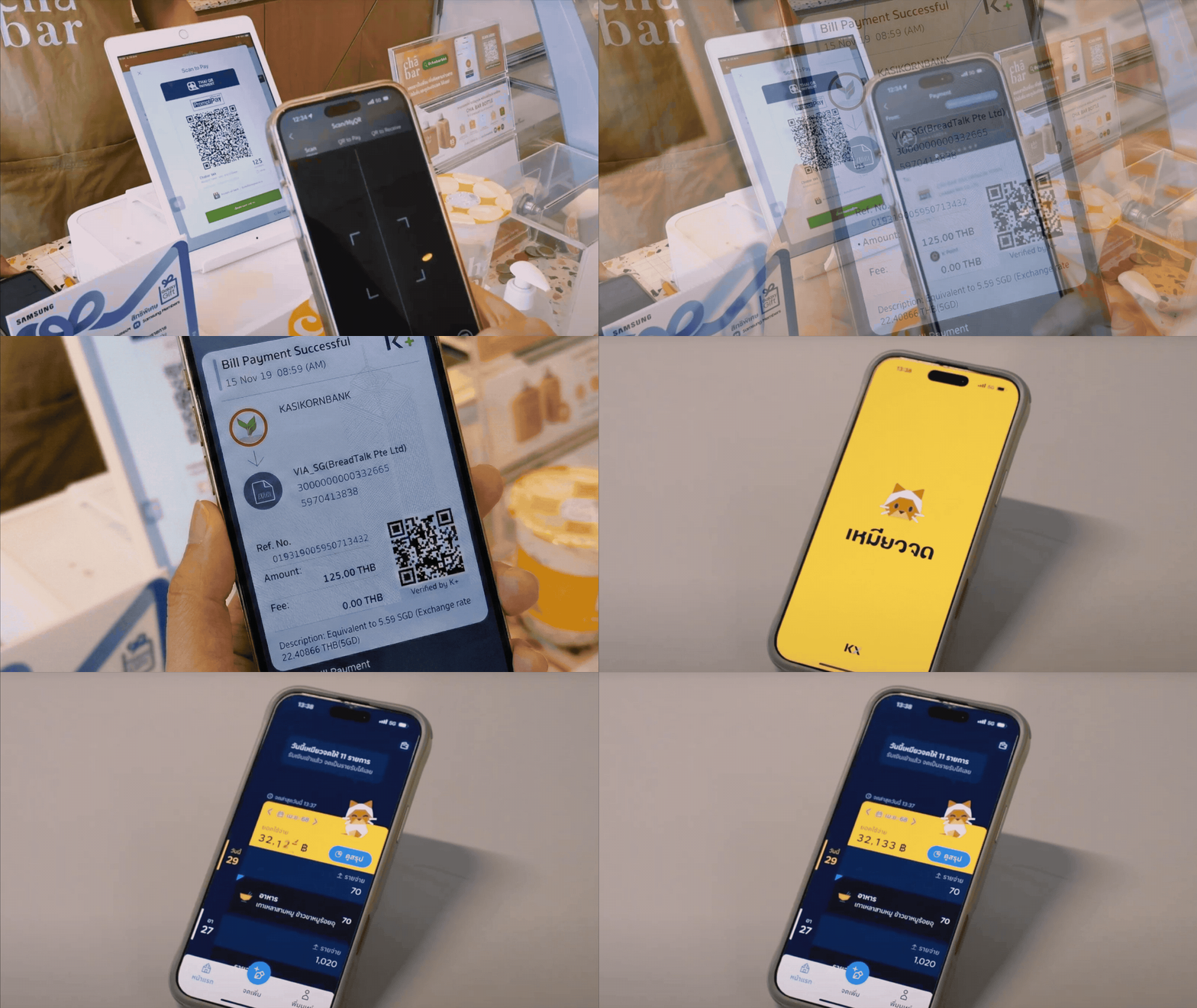

MeowJot's Constraint
Automation is powerful, but it's not magic. It relies on Opening the app.
Research: Approximately 65% of drop-offs in financial apps occur when users lose track of their data for more than 7 days. While automation handles the scanning, it creates a silent backlog if the app remains unopened, leaving users feeling overwhelmed and out of control.
Recognizing the ‘Data Debt’ Anxiety, I saw this as a massive opportunity to help users build a sustainable habit through emotional connection rather than just notifications.
New Feature's Goal
Encourage users to open the app everyday.

I began by observing universal daily rituals like activities that require consistent commitment. I thought about feeding a pet; since our mascot is a cat, this felt like the perfect bridge to our engagement problem.
"What if every day a user opens the app, they're simply feeding their cat?"
This emotional hostage strategy creates a compelling habit-loop, transforming a dry financial task into a meaningful daily ritual of care.
Designing the Streak Logic
After landing on the Pet Feeding concept, I developed a narrative around MeowJot’s ultimate craving: Salmon. I wanted a visual metaphor for continuity that could stretch infinitely.

This creates a direct visual correlation between the length of the salmon and the Streak the user is maintaining. The longer the consistency, the longer the salmon conveyor belt grows, giving users a tangible and delightful reason to protect their progress.


The streak prototype showed a state-changing experience on an iPhone device after selecting expense categories.
Refining for Diverse Habits
After the usability testing, I identified two distinct user archetypes. To ensure the experience felt rewarding rather than demanding, I redesigned the system to be flexible based on user intent:

The Passive Tracker (Automation Focus):
Users who rely on automation for total spending. Their reward focuses on the Meal baseline, ensuring they still feel the emotional connection without the friction of categorization.

The Detailed Organizer (Category Focus):
Users who enjoy the granular control of categorizing expenses. Their reward includes both the Meal and the Salmon Toppings, reflecting their higher level of effort.

Designing for Flexibility (Support, Not Pressure): I realized that the first and most important goal is simply reducing "Data Debt" by getting the user to open the app. If a user does that, we've already won the first battle. Therefore, I decided that the system should be resilient and flexible, adapting to the user's current mental bandwidth rather than forcing a strict routine.

Streak Widget
A More Human Streak: Forgiveness Over Friction
While Duolingo’s "All-or-Nothing" streak works for language learning, I realized that financial tracking requires a more forgiving approach. Money is a high-stress topic; being too rigid can lead to financial burnout, causing users to give up entirely (Drop-off) the moment they miss a single day.
What I designed
Allow up to 7 days of absence.
The Hungry Cat Visual
Unlike other apps where a missed day equals a dead streak, MeowJot simply gets hungrier, but can survive a few missed meals.
The Final Nudge
On the 6th day, the widget serves as an immediate wake-up call to grab the user's attention.


Impact
Ending the cycle of forgetfulness through daily engagement
After implementing the MeowJot Streak and Widget within our team and a small test group for 3 months, we observed a significant shift in behavior
Quantitative Results
+10% Stickiness Metrics (DAU/MAU)
By transforming a financial chore into an emotional ritual, we saw a significant increase in daily engagement.
45% Increase in Categorization
The "Salmon Incentive" successfully nudged users toward providing more granular, high-value data.
Daily Visibility
8 out of 10 testers reported that the Widget was their primary reason for returning to the app, citing the cat's physical state as a action trigger.
Qualitative Results
Feedback
"I used to feel guilty when I forgot to log for a few days, so I’d just stop using the app altogether.
With the streak feature, I feel like the cat's waiting for me, not judging me. It makes me want to come back."
Awards & Recognition
Beyond the metrics, MeowJot's innovative approach to emotional UX has been recognized by two of the world’s most prestigious design institutions:
Winner, Mobile Application
Nominee, Digital Product

What I Learned
Empathy over Perfection
In fintech, being too strict is a bug, not a feature. Designing for human imperfection (like our 7-day buffer) leads to more sustainable habits.
The Power of Narrative
Storytelling, even as simple as a hungry cat, can transform dry financial data into a meaningful relationship between the user and the interface.